Treasure Party: Puzzle Fun!
- 4.6
- Rating
- 1.00M
- Installs
- Free
- Price

 Analysis by App-foxy
I approached Treasure Party: Puzzle Fun! as the kind of game I could open for a few minutes without needing a long explanation. That first impression is accurate: it combines dice rolls, tile matching, and small side activities into a light puzzle adventure that is easy to understand almost immediately. The important question is whether that simple loop stays enjoyable after the novelty fades. In my experience, it does, but mainly for players who like short sessions, gradual progress, and a little randomness rather than deep, purely skill-based puzzle solving.
Developed by PlayQ Inc, this free puzzle game is aimed at Everyone and runs on Android devices using version 7.0 or later. It has built a substantial audience, with over a million installs, an average rating of 4.6 from around 102 thousand ratings, and roughly 2.4 thousand written reviews. Those figures suggest that its approachable format works for many people, although popularity alone does not make every part of the experience equally satisfying.
How the main loop feels in everyday play
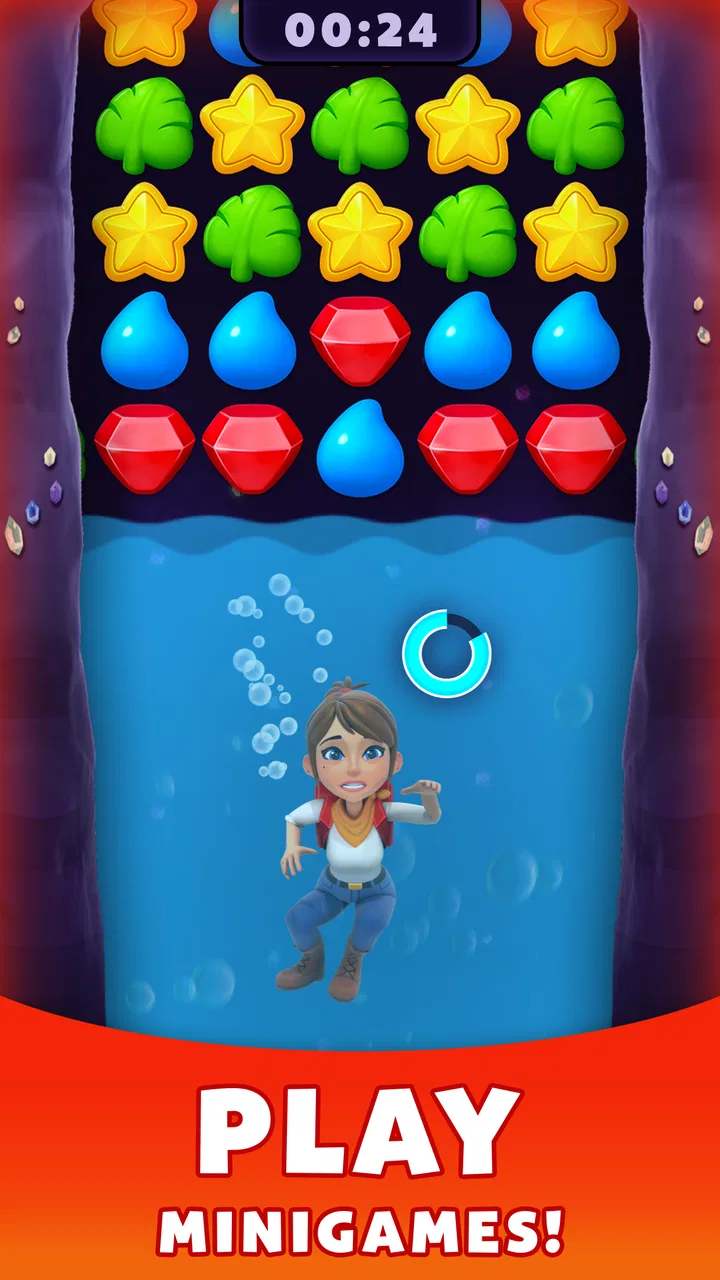
The basic routine is pleasantly clear. I roll dice, use the resulting movement or rewards to continue the adventure, match tiles when a puzzle board appears, and dip into mini-games when they become available. Each part gives the session a slightly different rhythm. The dice introduce anticipation, matching asks me to look for useful combinations, and the mini-games prevent the whole experience from feeling like one repeated board.
You May Also Like

 Blood Strike: 2.5 Anniversary
Blood Strike’s Loadouts Turn Every Drop Into a Tactical Gamble
A close look at Blood Strike’s custom loadouts: how fast access to signature weapons reshapes its battle royale rhythm, rewards preparation, and narrows the gap between fights.

 Pandora - Music & Podcasts
Pandora’s Music Is Easy to Start, but Harder to Recover
Pandora’s strength is its low-effort path from a seed to a station. Its weak spot is how much confidence it asks you to place in connection, setup, and quiet recovery.

 8 Ball Pool
 Is Built on Rivalries, Rematches, and Routine
A close look at the rivalries, rematches, shared routines, and unanswered safety questions that turn a quick pool match into a persistent mobile community.

 Samsung Music
’s Quiet Strength Is Playing What You Already Own
Its reach comes less from spectacle than from dependable access to a personal library. That simplicity is both the app’s strongest retention engine and its ceiling.

 AccuWeather: Weather Radar
AccuWeather Review: A Quick, Clear Forecast for Everyday Decisions
For everyday plans, the best forecast is the one you can understand quickly. AccuWeather makes rain timing, radar, and local conditions easy to act on, with a few trade-offs.

 Hill Climb Racing
Why Hill Climb Racing Still Turns Crashes Into One More Run
A tiny car, a bumpy hill and one more upgrade: Hill Climb Racing keeps resurfacing because its simple chaos makes every near-miss feel personal.
More From Our News Desk



That mixture is the strongest reason to try it. If I want a traditional match-three game, there are more focused alternatives with boards that demand careful planning every turn. If I want a board game, there are options with more strategic control over movement. This title sits between those formats. It is less demanding than a dedicated puzzle game and more interactive than a simple dice roller, which makes it a comfortable choice when I want entertainment without a steep learning curve.
A realistic use case is a short break during a commute, while waiting for an appointment, or after finishing a small household task. I can complete a little progress without preparing for a long session. The game’s structure also makes it easy to stop when I have had enough. That matters because some mobile adventures become frustrating when progress depends on staying online or committing to a lengthy sequence. Here, the appeal is the feeling of making a little headway whenever I return.
Still, the random element changes how much control I have. A good match or a favorable roll can make a session feel smooth, while an unlucky sequence may leave me waiting for another opportunity to advance. Players who enjoy chance-based progression will probably see that as part of the fun. Players who want every result to come from a carefully planned move may find the dice layer less rewarding than a conventional logic puzzle.
What I do during a normal session
I get better results when I treat the game as a sequence of small decisions rather than tapping through everything as quickly as possible. Before using a roll, I look at the immediate objective and consider whether the resulting position could open a useful reward or a better route. The game is not so complicated that every move needs lengthy analysis, but a few seconds of attention can make the difference between a satisfying turn and a wasted opportunity.
On matching boards, I avoid automatically taking the first available combination. I first scan for moves that may create a larger chain or clear a troublesome area. This is a simple habit, yet it helps because quick matches can remove the very tiles needed for a stronger follow-up. The board is still designed for casual play, so I do not treat every turn like a tournament puzzle. I simply delay the obvious move long enough to see whether a more useful one is available.
The mini-games work best as a change of pace, not as the sole reason to play. They add variety and give me something different to focus on after several matching turns. Their presence is useful when I am beginning to feel the repetition of the main loop, although anyone looking for a large collection of fully developed standalone games may find these activities more like brief diversions than separate experiences.
Small habits that make progress feel smoother
My first practical tip is to avoid spending every available resource immediately. When a game mixes rolls, matching rewards, and mini-game results, it is tempting to use whatever appears on screen. I prefer to pause and identify what the current objective actually needs. Saving a useful item or waiting for a more favorable board situation can make the next part feel less forced. This is not a secret trick; it is simply a way to prevent impulsive taps from controlling the whole session.
A second habit is to use the dice layer as a pacing tool. I do not think of every roll as a race toward the next screen. Instead, I use the board position to decide whether I want a quick burst of activity or a slower session in which I pay more attention to matching opportunities. That mindset makes unlucky rolls less irritating because the roll becomes one part of the adventure rather than a verdict on whether I played well.
A third useful approach is to stop after a natural piece of progress. If I continue only because I feel I must recover from an unlucky turn, the game becomes less enjoyable. Ending after a completed objective or a satisfying mini-game gives the next visit a cleaner starting point. This is especially helpful in a free title with optional purchases, because it reduces the feeling that I need to spend something simply to maintain momentum.
Settings and controls worth checking first
The most sensible first step is to look through the available in-game settings before settling into regular play. I check sound and music controls so the game fits the situation: quiet when I am in public, more audible when I am playing at home, and adjusted independently if the options allow it. I also pay attention to notification choices and any confirmation prompts that affect accidental taps. These checks are basic, but they make a bigger difference in a game built around frequent short interactions.
I also recommend checking the purchase-related controls on the device before playing for a child or sharing the phone. Treasure Party: Puzzle Fun! is free to download, but its optional in-app purchases range from $0.99 to $149.99 per item. That is a wide range, so I would not leave spending entirely to chance on a shared device. The Everyone rating describes the intended content level, not a promise that every player will make sensible purchase decisions.
For my own use, I prefer to keep the interface comfortable rather than rushing through animations or prompts. If a setting allows the game to be less intrusive, I use it. I do not see the point of turning a relaxed puzzle adventure into a noisy stream of interruptions. The best setup is the one that lets the board, dice, and mini-games remain the focus without competing with the rest of the phone.
Another practical check is the installed version. The current version is 3.26.0, and keeping the app updated is a sensible way to receive the developer’s latest adjustments. I do not treat an update number as a guarantee that every problem disappears, but an older build can make troubleshooting harder. If something feels inconsistent, I first close and reopen the game, check that the app is current, and then decide whether the issue is a temporary glitch or a limitation of the design.
Faster patterns for matching and movement
Speed in this game comes less from tapping rapidly and more from recognizing repeatable patterns. On a tile board, I look near the edges first because blocked or awkward corners can become harder to clear later. I then scan the center for moves that could produce a chain. This two-step scan is quicker than examining every tile equally, and it reduces the chance that I spend a turn on a harmless match while a more valuable opportunity remains visible.
I also try to preserve flexibility. A board with several possible matches gives me more control than one in which I immediately remove the only obvious pair. When the objective is not urgent, I choose the move that keeps more of the board open. This is a small trade-off: the most visually rewarding match is not always the best one if it leaves an awkward layout afterward.
For dice-based progress, I focus on the next useful outcome rather than imagining a perfect route. Random movement means I cannot always force the position I want, so I make the best of the available result. If a roll advances me toward a reward, I take advantage of it. If it does not, I use the turn as a chance to prepare mentally for the next puzzle or mini-game instead of treating it as wasted time.
These habits are more valuable than trying to discover a nonexistent shortcut. There is no reason to assume that rapid tapping, repeated restarting, or spending money automatically creates better results. The reliable advantage comes from paying attention to the board, recognizing when to preserve options, and stopping before impatience leads to poor choices.
Where the casual design starts to show its limits
The same simplicity that makes the game welcoming can limit its long-term appeal. The matching puzzles are easy to enter, but players who want increasingly demanding logic challenges may eventually prefer a specialist puzzle title. The dice mechanic also means that progress is not governed entirely by skill. Even a careful player can experience a slower session when chance does not cooperate.
There is also a difference between variety and depth. Moving between board progress, tile matching, and mini-games keeps the presentation fresh, but each element has to share attention with the others. Someone who wants a sophisticated match-three system may feel that the adventure layer distracts from the puzzle. Someone who wants a rich board-game strategy may feel that the matching sections interrupt the journey. I enjoy the blend, but I would not recommend it as a replacement for a focused game in either category.
The purchase structure deserves a realistic look as well. A free entry point is convenient, especially when I only want to test the style, but the presence of purchases up to $149.99 per item means I keep a clear personal budget. I would rather play at a comfortable pace than let a difficult or unlucky moment persuade me to buy progress. That approach may make advancement slower, yet it keeps the experience closer to the relaxed puzzle game I wanted in the first place.
Players who dislike repeated reward loops, chance-based movement, or any form of optional spending should probably skip this one. They may be happier with a paid puzzle game that offers a fixed set of handcrafted levels and no progression pressure. On the other hand, players who enjoy checking in, making a few matches, and seeing a colorful adventure develop will likely find the hybrid format more appealing than a completely linear puzzle collection.
Who will enjoy it most
I would recommend it to casual players who want several familiar activities in one package. It is a good fit for someone who likes match puzzles but does not want every session to demand intense concentration. It also suits players who enjoy the anticipation of dice and the small surprise of seeing what comes next. Families may appreciate the Everyone rating, although adults should still manage purchase settings when children use the device.
It is less suitable for competitive puzzle fans who measure enjoyment by perfect solutions, speed records, or increasingly complex mechanics. The game’s charm comes from its accessible blend, not from pushing one system to an expert level. Likewise, if I wanted a completely offline-feeling experience with no temptation to buy optional items, I would choose a different kind of puzzle game.
Compared with a standard match-three alternative, this title offers more context and variety but less concentrated puzzle depth. Compared with a board adventure, it gives me more direct tile interaction but less control over movement because dice are involved. That trade-off is the central identity of the game. It is not trying to be the deepest version of either format; it is a friendly middle ground for players who like switching between them.
My verdict after settling into the routine
Treasure Party: Puzzle Fun! works when I approach it as a light, repeatable pastime rather than a demanding puzzle examination. Its dice, tile matching, and mini-games complement one another well enough to keep short visits from feeling completely identical. The best experience comes from using a few disciplined habits: check the board before matching, preserve flexible moves, treat rolls as part of the rhythm, review settings early, and keep purchases under deliberate control.
The real strength is its low-friction variety, not advanced puzzle depth. That makes it easy to recommend to a friend who wants something cheerful and approachable for spare moments. I would be more cautious with anyone seeking strict logic, complete control, or a fixed premium experience. For the right player, the free entry point makes trying it simple, and the broad audience around PlayQ Inc’s game reflects that accessibility.
My final recommendation is to install it if you enjoy casual puzzle adventures and are comfortable with chance playing a role in progress. Give it a few sessions before deciding, because the appeal is in the combined routine rather than any single mechanic. If that rhythm feels relaxing, it can become a pleasant break-time game. If the random movement or purchase prompts bother you from the start, a focused puzzle alternative will probably serve you better.
FAQs for Treasure Party: Puzzle Fun!
01What is Treasure Party: Puzzle Fun!?
Treasure Party: Puzzle Fun! is a casual mobile game that combines board-game movement, puzzle challenges, and collectible rewards. Players progress through colorful maps, complete short interactive levels, gather coins or treasure, and unlock additional content. Its simple controls make it approachable for casual players, while the variety of mini-games and progression systems provides goals to work toward over multiple sessions.
02Is Treasure Party: Puzzle Fun! free to download and play?
The game is generally free to download and begin playing, but it may include optional in-app purchases. These purchases can provide extra resources, cosmetic items, boosters, or faster progression. Players can usually enjoy the main gameplay without spending money, although energy limits, waiting periods, advertisements, or difficult stages may encourage optional purchases. Check the store listing for current pricing and purchase details.
03Does Treasure Party: Puzzle Fun! require an internet connection?
An internet connection may be required for some or all features, particularly when loading advertisements, synchronizing progress, receiving events, accessing online rewards, or validating purchases. Certain parts of the game might work temporarily offline, but this can vary by device and version. For the most reliable experience, use a stable Wi-Fi or mobile-data connection and keep the app updated.
04Is Treasure Party: Puzzle Fun! suitable for children?
Treasure Party: Puzzle Fun! uses bright visuals, simple mechanics, and casual puzzle gameplay that may appeal to children and families. However, parents should review the age rating, advertising content, chat or social features if available, and in-app purchase settings before allowing younger players to use it. Device-level parental controls are recommended to prevent accidental purchases and manage playtime.
05What should I know about ads, permissions, and in-app purchases?
Like many free-to-play mobile games, Treasure Party: Puzzle Fun! may display advertisements and offer optional purchases for bonuses, extra attempts, currency, or other advantages. The exact experience can change after updates or according to your region. Before installing, review the app-store privacy information and requested permissions. Avoid sharing unnecessary personal details, and enable purchase authentication on your device.
Pros
- Colorful graphics and cheerful animations make each level feel lively.
- Short puzzle rounds are convenient for quick gaming sessions.
- A wide variety of board layouts helps keep the main gameplay fresh.
- Simple controls are easy to understand for players of different ages.
- Character and item designs add personality beyond the basic match gameplay.
Cons
- Some later puzzles can feel heavily dependent on lucky tile combinations.
- Limited moves may make certain stages frustrating without extra boosters.
- Frequent rewards and pop-ups can interrupt the flow between levels.
- Progression may feel repetitive after extended play sessions.
- Optional purchases can become tempting when resources run low.

Treasure Party: Puzzle Fun!
Gallery